Bergen Aquarium Animals: Penguins, Seals, Otters, and Exhibits
Bergen greets you with rain about 240 days a year, so heading toward the western tip of the Nordnes peninsula is usually a damp walk. I remember ducking under the wooden entryway of Akvariet with soaked shoulders and fogged glasses, wondering if paying the admission was just an expensive way to escape a downpour. It took about five minutes for that skepticism to vanish. Watching the diverse collection of bergen aquarium animals going about their business quickly makes you forget the gray skies overhead.
The facility opened back in 1953, and while modern expansions have added sleek glass tunnels and reptile vivariums, it still holds onto an intimate, salty charm. It is not an overwhelming megasite like you find in Valencia or Atlanta. Instead, you get close enough to hear the puff of a harbor seal exhaling at the surface and the sharp squawk of gentoo penguins squabbling over smooth nesting pebbles. Here is what you will actually encounter once you step through the gates.
Book your bergen aquarium experience:
Meet the Famous Bergen Aquarium Penguins and Their Stories
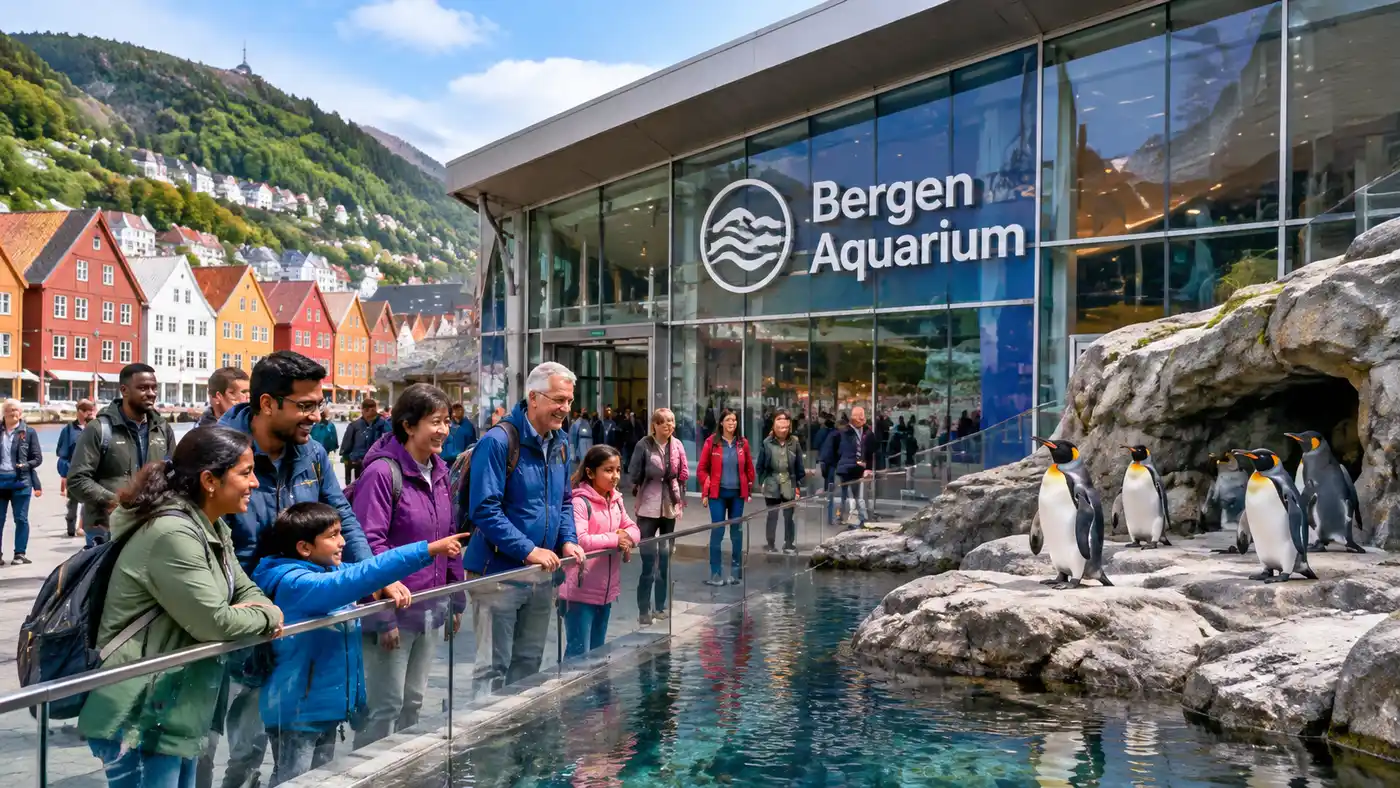
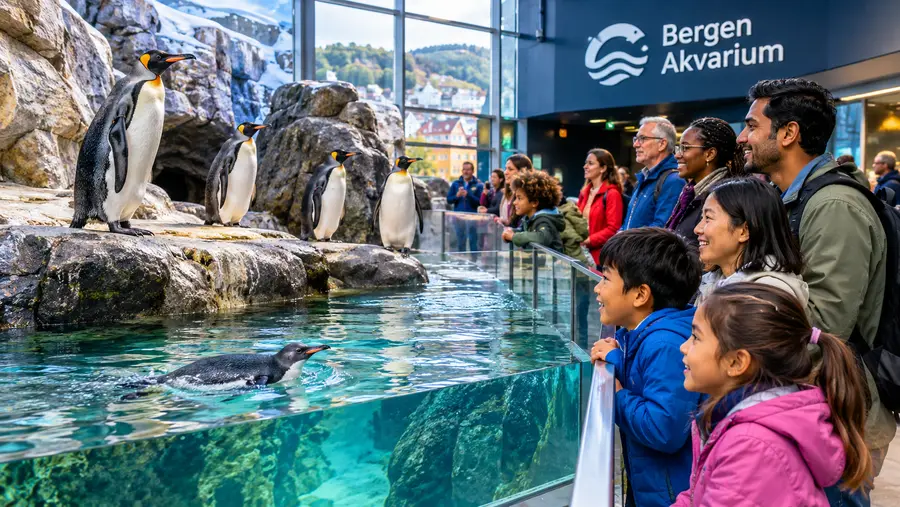
The outdoor penguin pool sits right near the entrance, surrounded by tiered stone ledges and cold salt water pumped straight from the Byfjorden deeps. Gentoo penguins rule this area. They are the third-largest penguin species alive, recognized by the bright white bonnet stripe across the tops of their heads and bright orange beaks that look like fresh carrot peelings. Watching them on land is pure slapstick comedy. They waddle with an awkward, heavy-bottomed pitch, wings pinned backward for balance, looking completely out of their element until they hit the water. Once submerged, they turn into torpedoes. They can clock swimming speeds near 36 kilometers per hour, darting beneath the surface so fast your eyes struggle to track them.
The colony has developed quite a local reputation over the decades. Back around 2005, international news crews turned up because of the famous bergen aquarium gay penguins. Two males in the colony had formed a tight, loyal partnership, building nests together from stolen rocks and shunning the females entirely. The zookeepers eventually handed them an orphaned egg that a heterosexual pair had abandoned. The male couple incubated the egg diligently, hatched the chick, and raised it together as model parents. Stories like that give this specific flock a lot of personality. You can stand by the railing and easily spot couples preening each other or bickering with neighbors over prime real estate.
Nesting season makes the pool especially loud. Gentoo mating calls sound like somebody blowing a broken plastic trumpet into an empty tin can. They bow to one another, hiss at passing birds, and guard their little piles of gray slate stones with surprising ferocity. If you visit in early summer, you might catch a glimpse of downy gray chicks hiding beneath a parent's warm belly feathers. Standing there watching them, you quickly realize these birds run the show here.
Pro tip: Grab a spot on the upper viewing deck about 10 minutes before the afternoon feeding. The keeper talks are mostly in Norwegian, but watching the birds chase capelin fish through the clear water is worth the crowd.
Splashing Around: Bergen Aquarium Seals and Otters
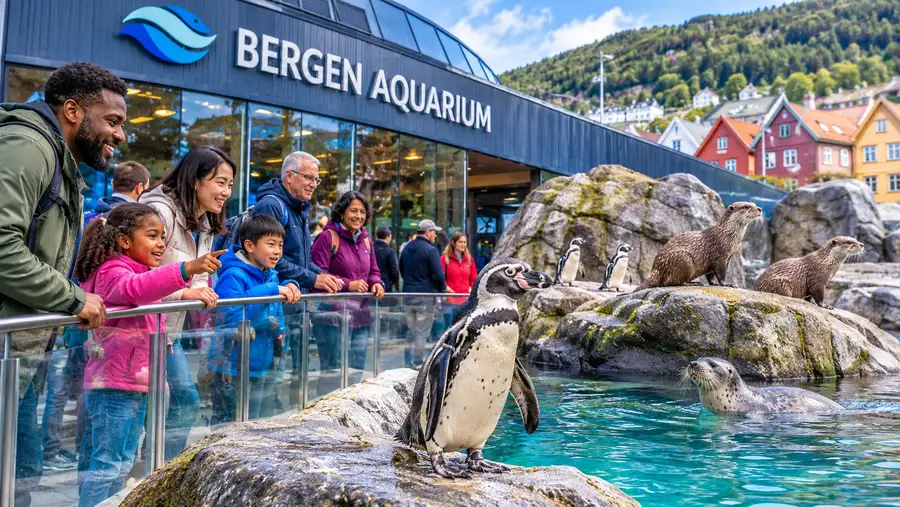
Right beside the penguins, the marine mammal area splits attention between harbor seals and California sea lions. People often mix them up, but the difference becomes obvious once you watch them climb out of the pool. The seals have tiny front flippers and inch along on their bellies like fat, spotted caterpillars, while the sea lions can rotate their hind flippers forward to jog across the concrete. Seeing the bergen aquarium penguins seals complex side by side gives you an immediate sense of how different cold-water predators have adapted to the coastline.
The harbor seals feel distinctly Norwegian. These are the same animals you might spot bobbing like slick bowling balls in the waters along the western fjords. At Akvariet, they glide effortlessly along the acrylic walls of their 500,000-liter pool. They love interacting with people through the glass. If you press a flat palm against the surface, younger seals will often circle back, rolling upside down to peer right into your eyes with huge, dark, glassy pupils. Their whiskers are incredibly sensitive, designed to pick up fish vibrations in murky coastal currents.
Just around the corner, the bergen aquarium otters occupy an enclosure that is almost impossible to walk past quickly. These are Asian small-clawed otters, noticeably smaller and much more hyperactive than the wild European river otters native to Norway's coast. They travel in a tight, chirping pack, scampering over fallen logs, sliding down mossy banks, and constantly manipulating objects with their agile little fingers. I spent 20 minutes watching one otter methodically wash a flat river stone, rolling it between its paws like a coin trick before tucking it under its armpit.
If you want to catch both the seals and otters at their most energetic, time your stroll around the daily feeding schedule. Outside of meal times, the otters love to pile on top of one another inside their heated indoor hut, turning into a motionless knot of wet brown fur until the keeper rattles a bucket.
Note: The outdoor seal enclosure can get slippery during the winter months when rain freezes over the wooden boardwalks. Keep a firm hand on the rail if you are visiting between December and March.
Under the Waves: The Akvariet i Bergen Haitunnel and Deep Sea Tanks
Stepping inside the main building takes you straight down into the dim, subterranean world of the North Sea. The temperature drops slightly, the lighting turns deep aquatic blue, and the air smells faintly of brine. The centerpiece here is the akvariet i bergen haitunnel, a transparent walkthrough arch where water presses in from three sides. It is not huge compared to massive oceanic facilities abroad, but walking through it feels atmospheric and eerie.
Small houndsharks, dogfish, and graceful rays cruise right over your head. You can inspect the pale white undersides of thornback rays as their mouths work rhythmically against the glass, making them look oddly like smiling cartoon faces. Nurse sharks resting on the gravel floor show off their sandpaper-like skin and broad, flat snouts. The tank also houses massive Atlantic cod, lingering suspended in mid-water with their distinct chin barbels twitching in the filter current. It gives you an unusual perspective on fish that most Norwegians only ever see filleted on a dinner plate.
Beyond the shark tunnel, the native marine exhibits tell the real story of the surrounding fjords. Over 40 individual aquariums line the darkened hallways. Some hold creatures that seem straight out of prehistoric folklore:
- Atlantic wolffish: Massive, grumpy-faced bottom-dwellers with blunt heads and rows of crushing canine teeth built to smash open green sea urchins and crabs.
- European monkfish: Master of camouflage lying half-buried in sand, using a fleshy lure attached to its spine to trick unwary pollock into its cavernous jaws.
- Moon jellyfish: Drifting weightlessly in specialized circular kreisel tanks where gentle currents keep their delicate translucent bells from tangling.
- Red king crab: An invasive giant from the Barents Sea, with spiny legs spanning more than a meter across the rocks.
The fjord tanks are deeply fascinating because they show what actually lives 200 meters below the surface right outside the city harbor. Deep-water gorgonian corals, delicate sea pens, and bright orange anemones thrive here in near darkness. Most people think of coral reefs as strictly tropical, but Norway's cold-water reefs are among the largest on earth, and these exhibits give you a rare look at that fragile world.
Book your bergen aquarium experience:
Creepy Crawlies at Reptilparken Bergen and Tropical Exhibits
When the chill of the North Sea tanks starts getting into your bones, heading upstairs to the tropical zone feels like stepping off a plane in Bangkok. The air hits you with an immediate wave of humid, 28-degree warmth. This wing, often referred to locally as reptilparken bergen, houses one of the most comprehensive collections of cold-blooded animals in Scandinavia. It serves as a stark contrast to the seals and cod swimming downstairs.
The Philippine crocodiles are the heavyweight stars of this section. They belong to one of the most endangered crocodilian species on the planet, with fewer than a few hundred estimated to survive in the wild. Akvariet participates in an international breeding program aimed at keeping their bloodlines alive. Seeing one of these prehistoric beasts resting on a warm concrete slab, eyes yellow and slit-pupiled, mouth slightly agape to regulate body heat, is genuinely unsettling. They do not move for hours, yet you can sense the raw, explosive power wound up beneath those scutes.
Along the perimeter walls, floor-to-ceiling glass terrariums shelter an assortment of venomous and non-venomous snakes. You will find emerald green tree pythons coiled around mossy branches like shiny garden hoses, venomous vipers, and hefty boa constrictors resting under heat lamps. Small poison dart frogs add vivid splatters of electric blue, bumblebee yellow, and neon green to the damp terrarium foliage. A separate insect area houses giant bird-eating tarantulas and stick insects so convincing you have to stare at a cluster of twigs for two minutes before you spot the legs.
I find this part of the aquarium oddly peaceful, mostly because it tends to be quieter than the penguin deck outside. If you walk over through the historic neighborhood - maybe after you walk out past the wooden houses of Nordnes - this warm greenhouse room is the ultimate spot to thaw out frozen fingers.
Comparing the Exhibits: Where to Spend Your Time with Bergen Aquarium Animals
Akvariet is compact enough to see thoroughly in two to three hours, but certain sections demand far more patience than others. If you rush through, you will miss the small behaviors that make the place special. To help plan your route, here is how the primary exhibit areas compare across the grounds.
| Exhibit Zone | Key Species | Environment | Average Time Needed |
|---|---|---|---|
| Penguin Enclosure | Gentoo Penguins | Outdoor / Cold seawater | 35 minutes |
| Seal & Otter Pools | Harbor seals, Asian small-clawed otters | Outdoor & semi-covered | 40 minutes |
| Haitunnel & Deep Sea | Dogfish, rays, Atlantic cod, wolffish | Indoor / Low light | 45 minutes |
| Reptile Park & Tropics | Philippine crocodiles, boas, dart frogs | Indoor / Humid tropical | 30 minutes |
| Touch Pools & Invertebrates | Starfish, crabs, sea urchins | Indoor / Interactive | 15 minutes |
If you are traveling with curious kids or simply like getting your hands wet, do not skip the shallow touch pools tucked near the native marine section. These low-slung stone troughs allow you to gently reach into cold salt water to feel the rough, sandpaper skin of a common sea star or the smooth shell of an edible crab. Keepers usually hover nearby to demonstrate how to handle the creatures safely without stressing them out.
To get the absolute most out of your visit, consider structuring your walk through the exhibits logically:
- Start outside: Check the penguin and seal pools immediately upon arrival to see what feeding times match your afternoon.
- Head underground: Wander through the haitunnel and local fjord tanks while your coat dries off from the Bergen mist.
- Warm up upstairs: Spend twenty minutes in the tropical greenhouse admiring the crocodiles and tiny dart frogs.
- Loop back outdoors: Finish with a second look at the otters, who are often much more active in the late afternoon.
Frequently Asked Questions about bergen aquarium animals
What are the most popular bergen aquarium animals to see?
The gentoo penguins, harbor seals, and Asian small-clawed otters draw the biggest crowds outdoors. Indoors, the walkthrough shark tunnel and the Philippine crocodiles in the tropical reptile section are the main highlights.
Can you touch any animals at Bergen Aquarium?
Yes, there are designated coastal touch pools where visitors can gently hold starfish, sea urchins, and shore crabs under the supervision of aquarium staff.
Are the penguins kept outside all year round?
Yes. Gentoo penguins are native to sub-Antarctic islands, so the chilly, wet climate of Bergen actually suits their natural biology quite well. They remain in their outdoor pool through winter snow and summer rain.
How many species live at Akvariet?
The aquarium houses roughly 400 different species across more than 60 tanks and outdoor enclosures, ranging from deep-sea Norwegian fish to tropical reptiles and birds.
Quick Reference
- Over 400 marine and land species
- Outdoor gentoo penguin colony
- Walkthrough shark tunnel indoors
- Heated tropical reptile house on upper level
Book your bergen aquarium experience:
My Take
Akvariet is not trying to compete with massive corporate oceanariums, and honestly, that is its greatest strength. It feels grounded in its environment, giving you a genuine window into the weird, cold waters that lie right beneath Bergen's fishing wharves alongside its more exotic tropical guests. Take your time by the outdoor pools, watch the otters cause trouble, and let yourself linger in the underwater tunnel. It remains one of the most characterful corners of the city, rain or shine.
Read more about bergen aquarium.